


Embroidery
EMB-1007
2D Satin Outline
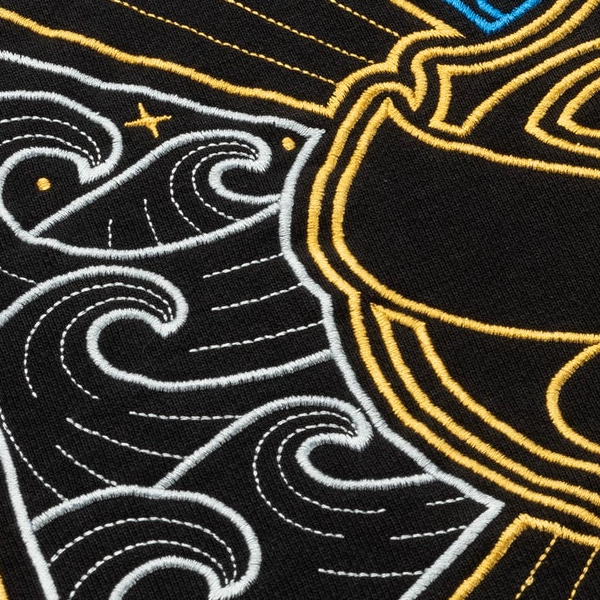
Satin outline embroidery uses satin stitches to outline a design. The stitches form a smooth, shiny, solid line that gives the outline a polished finish.
VISUAL EFFECTS
Smooth, glossy satin-stitch outline
HAND-FEEL
Smooth, slightly raised line
BENEFITS
Satin stitches give outlines a smooth, glossy, well-defined finish, suited to logos, text and intricate patterns.
LIMITATIONS
Uneven tension changes the look of the satin stitch, and poor hooping or too much tension can pucker the fabric. The stitch suits smooth lines and curves, and settings are tested on scrap fabric first.
PROCESS
[01] Design Creation
Prepare a design of continuous, smooth lines suited to satin stitches.
[02] Digitising
Convert the design into an embroidery file, for example DST or PES.
[03] Hooping
Secure the fabric in an embroidery hoop so it stays taut and stable.
[04] Thread Selection
Choose thread colours for the contrast required; satin stitches give a smooth, shiny finish.
[05] Machine Setup
Load the file and set stitch density, tension and speed for the fabric and thread.
TO CONSIDER
Design Complexity
Satin outlines suit designs with smooth lines and curves. Consider the intricacy of the design against what satin stitches can do.
Thread Quality
Choose high-quality embroidery thread for a smooth, glossy finish, and consider its durability and colourfastness.
Testing on Scrap Material
Test on scrap fabric before embroidering the final product, to confirm the design and settings give the satin stitch required.